Lagos, Nigeria (UTC+1) · open to remote roles

Naomi ColeNaomi Cole

I build software people rely on.

Backend and AI engineer. Real-time platforms, payment systems and AI tools that work under real pressure: real users, real money, live data.

Things I've built

Three production systems I designed, built and still run, from the first database table to on-call support.

PRISM: AI recruitment and proctored assessments

One platform for the whole hiring pipeline: job post, CV screening, proctored online test, review and outcome emails. Built because we were losing hours reading CVs by hand and supervising tests in person.

  • Claude screens each CV against the job's requirements and returns a requirement-by-requirement breakdown with evidence, not just a score. It's optional per job, and HR can always screen people in or out manually.
  • Live proctoring: candidates wait in a virtual waiting room until HR starts their test, and HR can watch, listen in or talk to them privately over self-hosted LiveKit.
  • Cheating detection runs in the candidate's browser with MediaPipe, flagging looking away, a missing face or a second person, plus tab switches, copy-paste and screenshot attempts. No video is sent anywhere for analysis.
  • Every violation is stamped with its moment in the recording, so a reviewer clicks it and jumps straight there.
How I built it

Stack. Django REST Framework backend and a React + TypeScript frontend (TanStack Router, Tailwind), self-hosted on an Ubuntu VPS behind Nginx and Gunicorn.

Built for real conditions.

  • A TURN relay so video works on restrictive Nigerian mobile networks, with a snapshot fallback when video can't get through.
  • Sessions recorded in 30-second chunks, joined with FFmpeg and streamed back through signed, time-limited links.
  • The timer runs on the server, so it can't be tampered with. Connections recover from drops automatically, and HR can add time or reopen a test for someone whose internet failed.
  • Test links expire for newcomers without cutting off anyone already mid-test.

What I learned. The hard part isn't the features. It's making them hold up on bad networks, cheap laptops and real candidates. Most of the engineering went into that.
CORS Portal: RTK network access and payments

Surveyors across Nigeria rely on a network of 40+ GNSS reference stations for centimetre-level RTK corrections. Getting connected used to mean manual payment checks, staff switching accounts on by hand and "I've paid but it's not working" calls. This platform handles the whole flow: sign-up, payment, instant access, usage and renewal.

  • Activation in seconds: the caster ignores direct database changes, so I recorded the Redis messages its own admin tool sends and now the portal sends the same reload signal after every payment. Paid means connected, straight away.
  • Payments that can't get lost: Paystack, mobile money and an in-app wallet share one idempotent pipeline keyed on the payment reference, so each payment is applied exactly once.
  • Plans that match how surveyors work: a same-day pass and data bundles that raise how many devices can connect at once, with safe one-step data sharing between colleagues.
  • A safety net: a background watcher reads the caster's log every 30 seconds and fixes a refused paid user on its own, alerting admins only if that fails.
How I built it

Stack. Python/Flask with Jinja and plain JavaScript, SQLAlchemy over the portal's database, wired directly into the caster's MySQL database. It runs as a Windows service, and the Android app uses the same backend, so web and mobile always agree.

Admin console built for decisions. A live activity feed, sign-ups by state, payment totals that reconcile exactly with the activity list, record-day stats and approval queues.

Built for real conditions.

  • Mobile money freezes its exchange rate on the payment record, so every payment can be explained later.
  • Timezone-safe reporting across records stored in UTC and local time.
  • Every fix comes with a pytest test so it stays fixed.

What I learned. The hard part isn't the features. It's the gap between "the database says active" and "the surveyor's receiver actually connects in the field". Most of the engineering went into closing that gap.

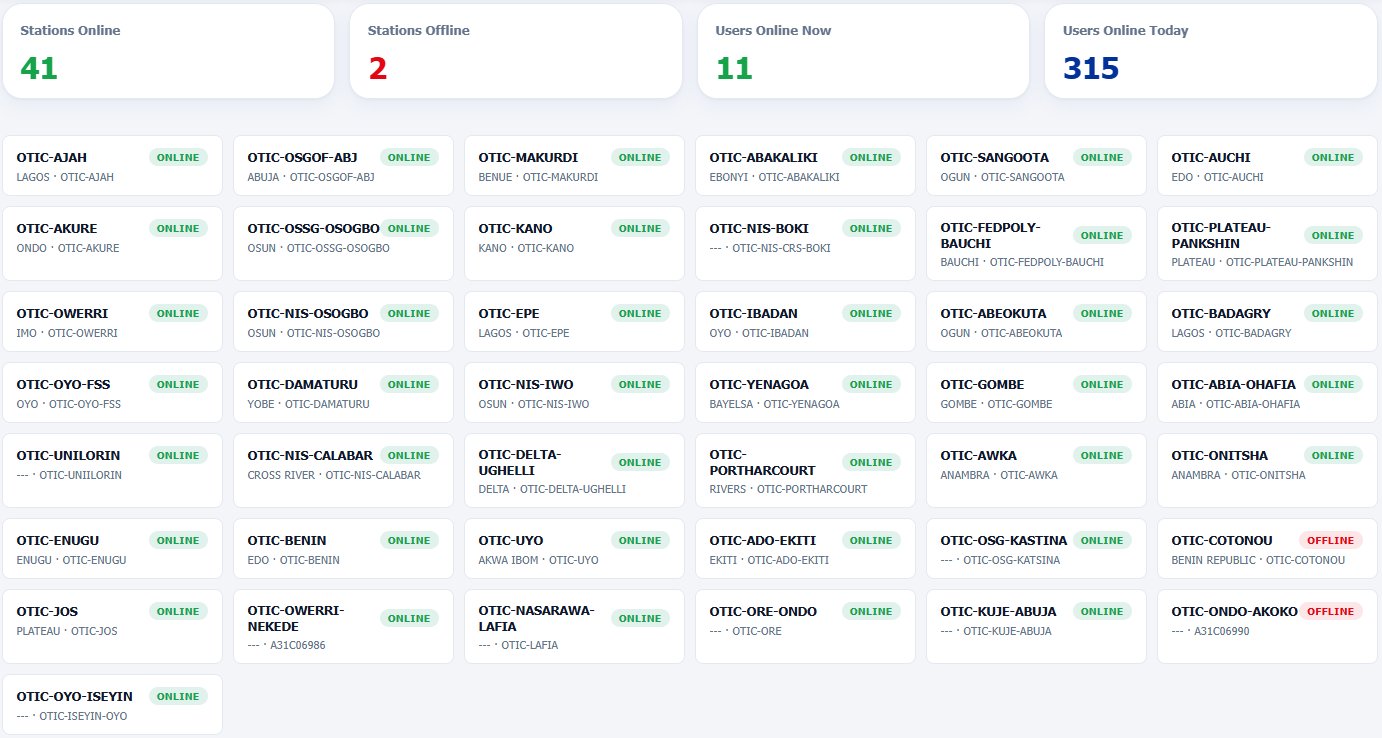
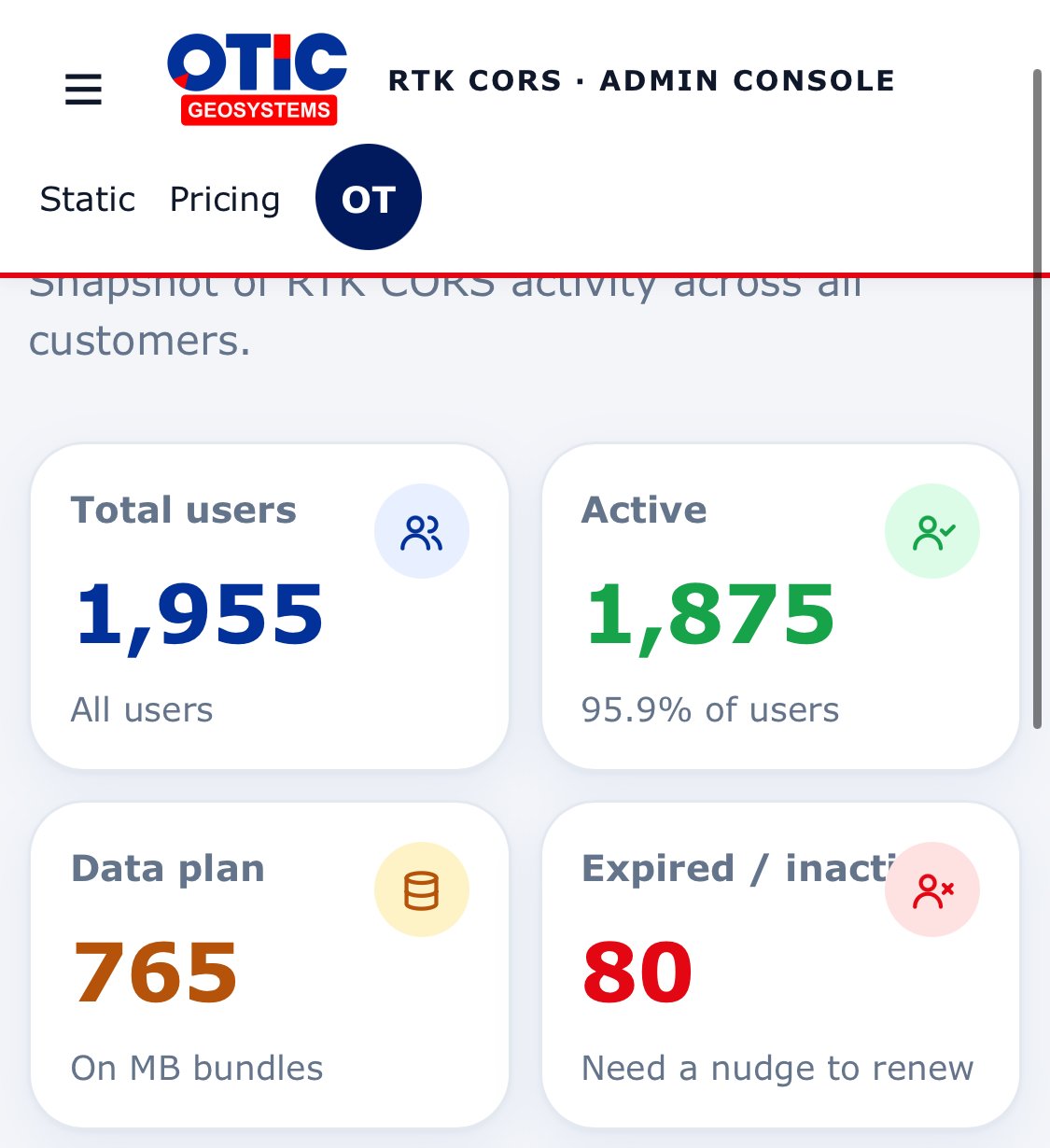
Live activity view: 41 stations online, 2 offline, 11 users online now and 315 online today, with a grid of station statuses Admin console on mobile showing 1,955 total users and 1,875 active
Live station status across Nigeria, and the admin console on mobile.

Workforce: HR and operations platform

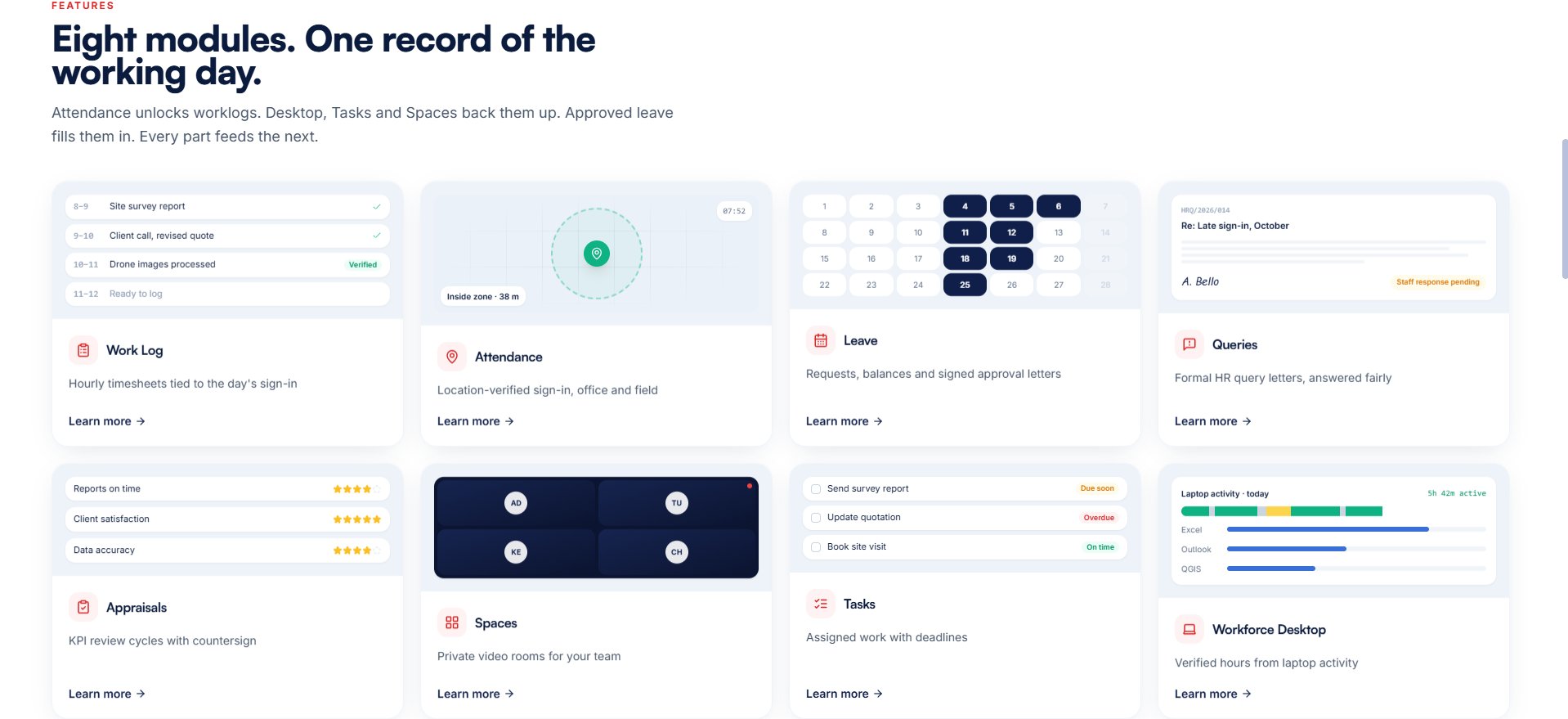
Attendance, worklogs, leave, tasks and meetings used to live in separate places, and none of them could vouch for the others. Workforce connects them: sign-in, hourly worklogs, tasks and meetings, verified hours, then a management dashboard.

  • Meetings that do their own admin: invite-only video rooms on self-hosted LiveKit, and when a meeting ends, the time people spent in it goes into their worklogs automatically, with dropped connections joined up.
  • AI where it helps: speech is transcribed in each person's own browser, then Claude turns the meeting into key points, decisions and action items with owners, beside an attendance table of who joined and left when.
  • A Windows desktop app checks each logged worklog hour against laptop activity in the same hour, and drafts plain-English worklog entries from what was open.
  • Built with privacy in mind: monitoring runs only between sign-in and sign-out, is visible only to the MD, pauses for lunch, and never takes screenshots or webcam images.
How I built it

Stack. Django REST Framework with MySQL; React + TypeScript (Vite, TanStack Query, Tailwind); a self-hosted LiveKit server and an Electron desktop app, all on our own Ubuntu VPS.

Built for real conditions.

  • The desktop app keeps up to a week of activity offline and uploads it when the connection returns, and a scheduled task restarts it if it's closed.
  • The server rejects activity outside a person's sign-in window, and worklog slots lock by the clock, so hours can't be back-filled.
  • Every pause or closed app shows up honestly rather than as missing data. Device tokens are stored hashed.
  • Leave and public holidays count towards attendance automatically, and HR is emailed when someone is due for promotion.

What I learned. The hard part isn't building the features. It's making them agree with each other, so attendance, worklogs, meetings and laptop activity all tell the same story.

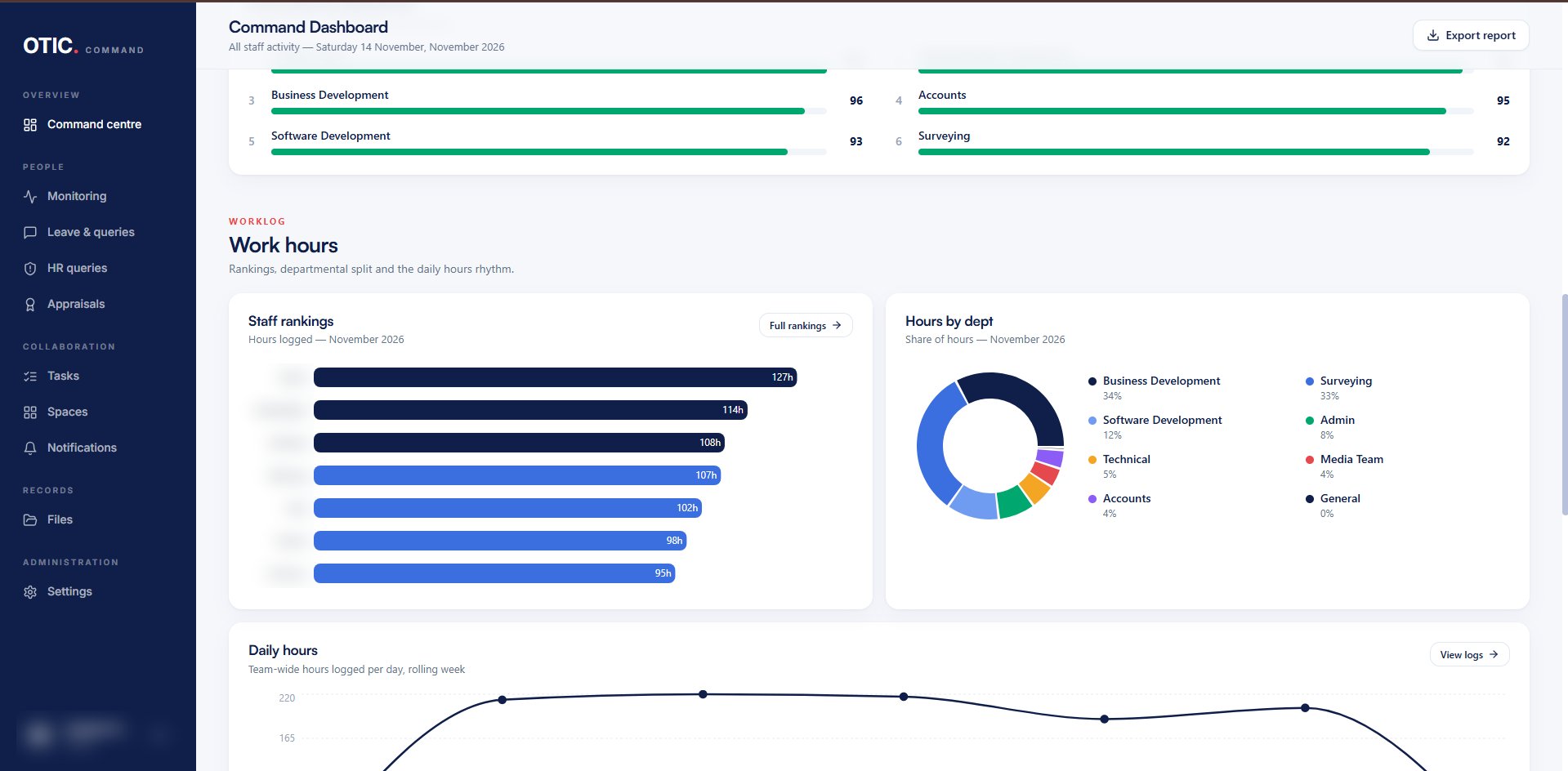
Workforce modules: work log, attendance, leave, queries, appraisals, spaces, tasks and desktop activity Command dashboard with staff hour rankings, hours by department and daily hours
Eight connected modules, and the command dashboard management uses. Staff names are blurred.

What I work with

Tools I've used to ship and run software in production, not just in tutorials.

Backend

Python, Django and Django REST Framework, Flask, SQLAlchemy, REST API design, JWT, OAuth2, WebAuthn

AI

LLM features with the Claude API, explainable AI screening, MediaPipe vision, document and receipt reading

Data and real time

PostgreSQL, MySQL, Celery, Redis, WebSockets, WebRTC with LiveKit, FFmpeg, Paystack and mobile money payments

Infrastructure

AWS, Docker, CI/CD, Linux, Nginx, Gunicorn, Windows Server and IIS, nightly backups

Frontend

React, TypeScript, Vite, TanStack Query and Router, Tailwind, Electron

About me

I'm a backend engineer with a computer science degree from Babcock University and about three years of building for real users, across full-time roles, a remote start-up and freelance projects.

I like owning the whole journey: designing the database, building the API, deploying it, and being the person who fixes it when something breaks at midnight. Lately I've been focused on making AI useful in production, which means fair, explainable and checked by people.

I'm open to remote backend and AI engineering roles, full-time or contract.

Let's build something

Hiring, or have a project in mind? Email me and I'll reply within a day.

runocole@gmail.com